
NWNJBA Gadget Garage
Northwest’s home for our love of gadgets
What is the Gadget Garage?
At Northwest, we love beekeeping — all aspects of it. You have to admit that one of the fun things about beekeeping is the equipment, and yes, even sometimes the gadgets people come up with. We are no different from most of you who love to tinker and provide practical (and sometimes not so practical) devices for the keeping of bees. Here we provide links to inspirations by others that we admire, and in many cases have tried. In addition, we are proud to say that we have developed a few gadgets of our own and are pleased to share them with you.
If you have some tips or pointers on gadgets, we’d love to hear from you. Send suggestions or comments to nwnjba@live.com.
We want to thank all of the beekeepers we’ve shared links to for their passion for the bees and for the inspiration in giving back to beekeeping. Links are valid as of May 20, 2026.

Gadget Garage Compilation Video
NWNJBA Members Kevin Inglin and Bob Kloss preview a compilation of gadgets. About 10 different gadgets are previewed, including several that are on this page.

Solar Wax Melter
You can melt beeswax in a slow cooker, or use the sun. All you need are an insulated container, something to hold and filter the wax, a bowl to catch it in, and some glass or plastic. The solar melter does not need to be made of wood or metal, and (other than the sharp glass or plastic) could be assembled by a fourth grader.

Drone Brood Frame
Drone brood frames are a tool used as part of an Integrated Pest Management program. Information about using these are abundant on the Internet but we got our start with Randy Oliver’s article on ScientificBeekeeping.com.

Bee Vacuum
The appeal of this vacuum is that you can assemble it inexpensively with parts from a local box store. Our own Bob Kloss talked about how he made his.

Simple Bee Waterer
Providing bees a source of water is a good management practice. Simply use a bucket with floating objects for the bees to land on and drill some holes in the bucket so that excess water can prevent your bucket from overflowing.
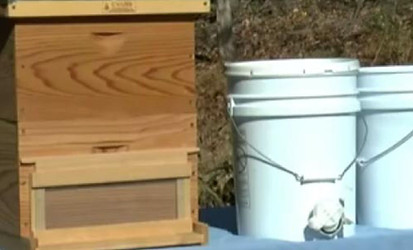
Crush and Strain Bucket System
Michael Bush was the inspiration with his crush and strain system to strain honey from wax cappings and even crushed honey comb.

Frame Assembly Jig
This gadget makes quick work and acts as an extra hand when assembling frames.

Swarm Catcher Pole
This design was originally from a blog called the Stone Mountain Bee Diary and creator John Jones. Unfortunately, the original source is no longer available. Below you'll find a preview of making one from a Northwest meeting, and you can watch a video of one being used to capture a swarm up in a tree.

Simple Robber Screen
You can make one out of scrap wood and tight screen, also known as hardware cloth.

Two Hive Screen
This devices allows you to put two hives together on one bottom board. One hive uses the traditional entrance and the second, top hive, uses a notch on the device to exit out of the back. This device is used for management techniques like the Demaree method.

Failed Communal Feeder
Unfortunately not every gadget works out. Here is a communal feeder that we tried out but didn’t have success with. People do have luck with communal feeders. This one was used at the wrong time of the year. and in the wrong proximity to the hives.

Alcohol Wash/Sugar Shake Mite Shaker
This video provides the premise of an alcohol wash/sugar shake shaker device used to monitor varroa mites. It discusses how to make one and how to use it.